Main Page
GUANAJUATO, MEXICO
History
Prehispanic . Spanish Rule . After Independence . Contemporary . VIPs
Prehispanic
Spanish Rule
The legal foundation of the township of Santa Fe y Real de Minas
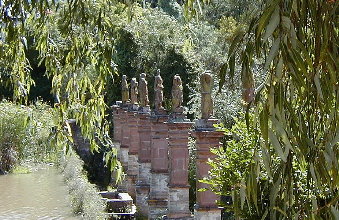
de Guanajuato dated of 1570, with this Coat of Arms. Riches from mining gave to Guanajuato the first earth dam in the New
World, Presa de los Santos
The extreme poverty of the mine workers and field laborers under spanish rule with the new liberal ideas of the rich and educated, gave the Intendencia of Guanajuato the lead on the social movement of the early 1800s. The mob under the Father
Hidalgo leadership assaulted Guanajuato in the first battle of Independence
war (28-Sept-1810). The Spaniards sook refuge in the massive alhondiga
= granary, then recently finished and resisted until a obscure miner ("Pipila")
set main door on fire. After Independence
Guanajuato was seat of the republican powers from 17th January to 13th February 1858, with President Juarez fleeing the Coup of Ignacio Comonfort. During the Intervention era, the French army stayed in Guanajuato for four years. Emperor Maximilian and his Empress visited the city for a week in 1864. The regime of President Diaz (1876-1910) brought progress for Guanajuato: foreign investors and managers for mines, railways, tramways, telephones, electricity, public lighting, "La Esperanza" water works, movie theaters, public parks "El Cantador" and "Florencio Antillon", La Paz square and statue, Juarez Theater and the Hidalgo Market. The city suffered economic depression on the civil war of 1910-1920
when changed hands between parties, and many mining works were left idle
since, leaving some ghost towns around (i.e. Mineral de la Luz).
Contemporary
Since 1952, year after year, enthusiastic students of the Universidad
under Professor Enrique Ruelas performed Cervantes' works called "Entremeses"
at Plaza San Roque. Twenty years after, those plays originated the famous
International Cervantes Festival with the plays still on scene.
Guanajuato's VIP
Fought against government in Guanajuato. He's buried in Guanajuato's parish church. 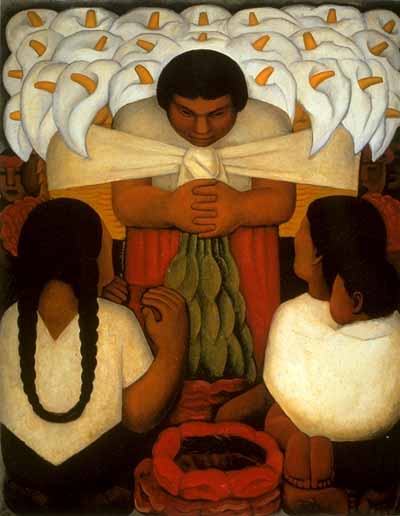
Ruelas, Enrique. Arts Professor born in Pachuca. Recreated the Cervantes' plays in Guanajuato's plazas with students and local characters, which originated the Cervantes Festival. Valle, Juan. ( -1865) Blind Poet and Liberal Politician. Author of "Flores y Abrojos", "Himno a la Cárcel", among others. Guanajuato's street where he was born is named after him.
|

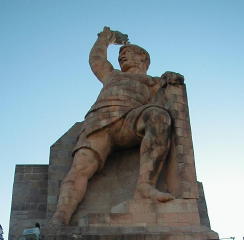 His feat is remembered with the massive monument next to Jardin de la Union
on the mountain.
His feat is remembered with the massive monument next to Jardin de la Union
on the mountain.